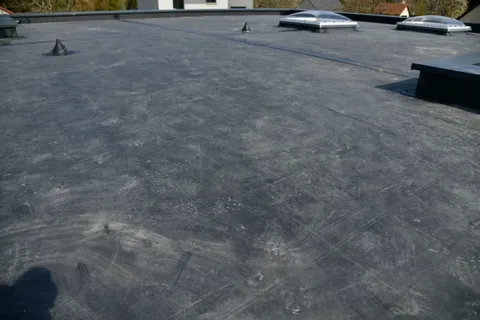
Walk across almost any rooftop in Manhattan, Brooklyn or Queens, and the choice comes down to three materials. EPDM rubber, TPO, and modified bitumen cover most flat roofs in the city. Each one handles New York’s freeze-thaw winters, humid summers, and crowded rooftops differently.
For building owners, co-op boards and property managers, picking the wrong system means early repairs, failed inspections or a roof that cannot meet city energy rules. This guide compares the three materials side by side, explains the NYC code requirements that shape the decision, and outlines what to look for in an EPDM rubber roofing contractor or any other flat roof installer.
Why NYC Flat Roofs Are a Special Case
New York roofs work harder than most. Winters bring repeated freeze-thaw cycles that stress seams and flashings. Summers trap heat in dense blocks of brownstones, walk-ups and mid-rise apartments. Rooftops also carry HVAC units, water tanks, bulkheads, satellite dishes and, more and more often, solar panels. Every one of those adds penetrations and foot traffic.
Access is another factor. Many NYC jobs have no crane access and limited staging space, so lighter materials and cleaner installation methods often win on practical grounds. Fire safety matters too. Open-flame torch work on attached row houses is a real concern, so many owners prefer systems that are glued, taped or heat-welded with hot air.
NYC Code Rules That Shape the Choice
Two sets of city rules affect which material makes sense.
Cool roof requirements. NYC’s Local Law 21 of 2011 tightened the city’s roof coating standards to require more reflective and emissive materials. Under the construction codes, recovering or replacing an existing roof covering must meet the cool roof section of the building code. The exception is work covering less than 50 percent of the roof area and less than 500 square feet. The NYC Department of Buildings cool roofs tool kit notes that a new reflective coating deflects roughly 70 to 90 percent of the sun’s heat. It lists EPDM rubber as a surface that can take a cool roof coating, while TPO and PVC are listed as not suitable for coating.
Solar and green roof requirements. Local Laws 92 and 94 of 2019 require new buildings, and existing buildings where the entire roof deck or roof assembly is replaced, to include a sustainable roofing zone. That zone must hold a solar system of at least 4 kW, a green roof, or both. City guidance states that standard roof membrane replacements do not trigger these requirements. Still, any owner planning a full tear-off down to the deck should confirm the rules with a registered design professional before choosing a membrane.
The practical takeaway: a black roof is no longer a simple default in New York. Whatever the membrane, the finished surface usually has to be reflective.
EPDM Rubber Roofing: The Proven Workhorse
EPDM (ethylene propylene diene monomer) is a synthetic rubber membrane, usually black, sold in large sheets. Seams are joined with adhesives and seam tape, so installation needs no open flame. EPDM stays flexible in cold weather, which helps it ride out NYC freeze-thaw cycles without cracking.
Its main strengths are a long track record, simple repairs and a lower material cost. Experienced EPDM roofers can patch punctures and reseal seams quickly, keeping EPDM roof repairs affordable over the roof’s life. Weak points include seams, which can loosen with age if they weren’t prepared properly, and the black surface, which absorbs heat. To meet NYC cool roof rules, owners typically add a reflective coating or choose white-on-black EPDM.
Many owners searching for Firestone roofing are looking for EPDM. Firestone’s RubberGard EPDM is one of the best-known brands in the market. Firestone Building Products rebranded its roofing line as Elevate in 2022 under Holcim, and in 2025 Holcim spun off its North American business as Amrize. The RubberGard name remains on the product, so specs and warranties under the Firestone or Elevate name refer to the same membrane family.
TPO Roofing: Reflective and Heat-Welded
TPO (thermoplastic polyolefin) is a single-ply membrane, most often white. Its seams are welded with hot air, which fuses the sheets into one continuous layer. Welded seams are generally stronger than taped seams, and the white surface reflects sunlight from day one.
That reflectivity is TPO’s biggest selling point in New York, since a white TPO roof can meet cool roof goals without a separate coating. The downsides are that TPO is a younger product with more variation between manufacturers, and repairs on older, weathered TPO can be harder because aged membrane does not always weld cleanly.
Modified Bitumen: Tough and Traditional
Modified bitumen is an asphalt-based roof built from reinforced sheets in two or more layers. Installers apply it with torches, hot asphalt, cold adhesives or self-adhering sheets. The top cap sheet is often covered in mineral granules, which protect the asphalt from UV light and stand up well to foot traffic.
Its multi-layer build makes modified bitumen very puncture-resistant, a real benefit on busy roofs with equipment and frequent service visits. The trade-offs are weight, the fire risk of torch-applied versions, and a dark surface unless a white granule cap sheet or reflective coating is used.
Side-by-Side Comparison
| Factor | EPDM | TPO | Modified bitumen |
| Material | Synthetic rubber | Thermoplastic single-ply | Asphalt with polymers, multiplies |
| Typical lifespan (years) | 15–30 | 15–30 | 15–25 |
| Seams | Adhesive and tape | Hot-air welded | Torched, mopped, cold-applied or self-adhered |
| Open flame needed | No | No | Only for torch-applied systems |
| Standard color | Black (white available) | White | Dark granules (white cap sheets available) |
| NYC cool roof route | Reflective coating or white EPDM | Reflective as installed | White cap sheet or coating |
| Puncture resistance | Good | Good | Very good |
| Ease of repair | Very easy | Moderate on older roofs | Easy to moderate |
| Weight | Light | Light | Heavier |
Which Roof Fits Which NYC Building
For brownstones, row houses and small walk-ups, EPDM is often the practical favorite. It is light, needs no torch next to neighboring buildings, and is easy for rubber roofers to repair years later. Adding a reflective coating keeps it in line with city cool roof rules.
For mid-rise apartments, offices and retail buildings with large open roofs and high summer cooling costs, TPO makes a strong case. Its white surface cuts heat gain, and the city’s NYC CoolRoofs program notes that cool rooftops can lower internal building temperatures by up to 30 percent. Welded seams also suit roofs with long, straight runs.
For roofs crowded with mechanical equipment, frequent service traffic or rooftop amenities, modified bitumen’s layered build offers the most protection against punctures and wear. Owners should ask for a cold-applied or self-adhered system on attached buildings and a white cap sheet to meet reflectivity rules.
No single material is best everywhere. The right choice depends on the roof deck, drainage, budget, foot traffic and what sits on top of the roof. A full comparison of membrane options is covered on the single-ply membrane roofing page, and the broader guide to flat roofing systems explains how each fits into a complete roof assembly.
What to Look for in an EPDM Rubber Roofing Contractor
The installer matters as much as the membrane. Most EPDM failures trace back to poorly prepared seams and flashings, not the rubber itself. When comparing EPDM roofing services, owners should confirm the contractor is licensed and insured in New York City, holds manufacturer certification for the brand being installed, and can offer a manufacturer-backed warranty rather than only a workmanship guarantee.
It also helps to ask how the contractor will meet cool roof requirements, whether the job needs DOB permits, and how they handle EPDM roof repairs after installation. A good EPDM rubber roofing contractor will inspect the deck and insulation first and explain whether a repair, recover or full replacement is the better path.
Frequently Asked Questions
Is EPDM or TPO better for NYC?
Both perform well. EPDM is easier to repair and handles cold well. TPO is reflective out of the box, which helps with cool roof rules and summer energy bills.
Does a black EPDM roof meet NYC cool roof rules?
Usually not on its own. Most replacement projects need a reflective coating or a white EPDM membrane to comply.
Is Firestone EPDM still available?
Yes. Firestone’s RubberGard EPDM is still sold, now under the Elevate brand.
How long does a flat roof last in New York?
With good installation and maintenance, most EPDM and TPO roofs last 15 to 30 years. Modified bitumen typically lasts 15 to 25 years.
Conclusion
EPDM, TPO and modified bitumen can all protect a New York building for decades. EPDM offers easy repairs and cold-weather flexibility, TPO brings built-in reflectivity, and modified bitumen delivers toughness for busy roofs. The deciding factors are the building’s size and use, its rooftop traffic, and NYC’s cool roof and sustainable roof rules. Pair the right membrane with a qualified installer, and the roof will pay for itself in fewer leaks and lower energy bills.